
Share Richard Roy Orr Sr.'s obituary with others.
Invite friends and family to read the obituary and add memories.
Stay updated
We'll notify you when service details or new memories are added.
You're now following this obituary
We'll email you when there are updates.
Select your format and elements to print

IN LOVING MEMORY OF Richard Roy Orr Sr.
Richard Roy
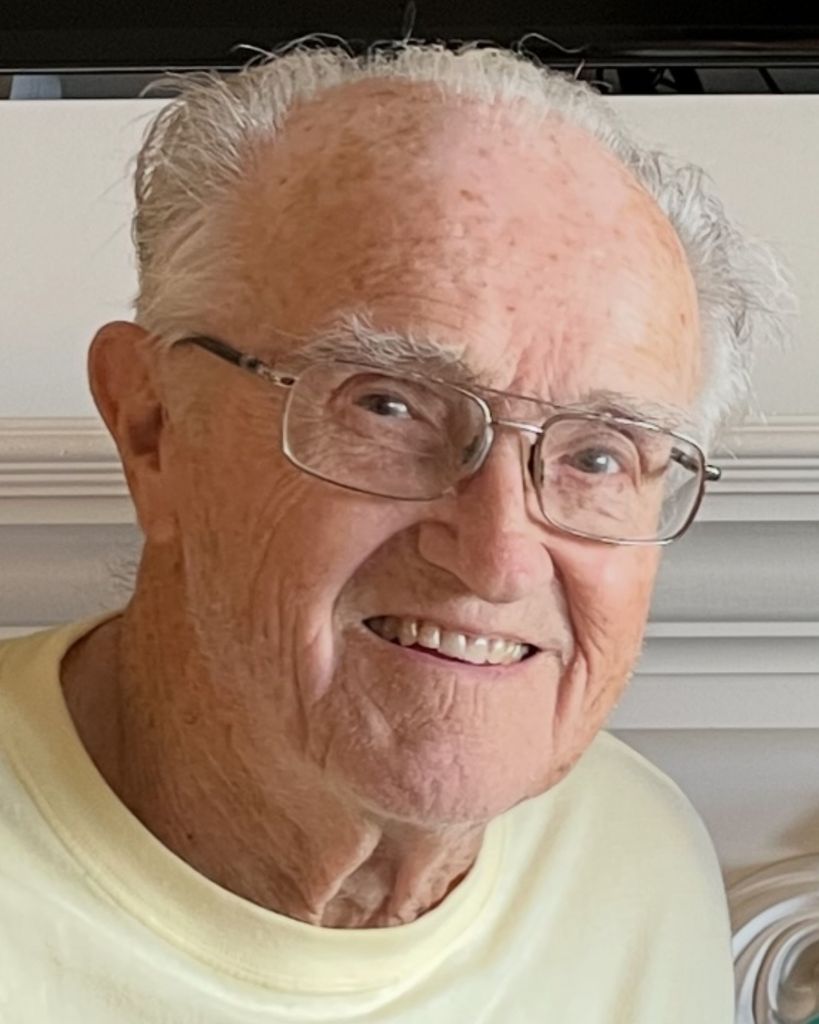
Orr Sr.
1925 — 2025
Lynn Haven
Richard Roy Orr Sr.'s Obituary
How To Live To 100: Work hard. Don’t sit around and waste the day. Learn a new skill every three years, practice it until you have mastered it completely, and then pick up something else to learn. Those are some of the philosophies we can remember when we think of Richard ‘Doc’ Orr. A man who reached 100 years old and probably could have lived another hundred if he hadn’t lost the love of his life last year.
Richard was proceeded in death by his beautiful wife, Almeda; his mother, Mabel; his father, Herbert; and four siblings (Herbert, Carl, Howard, and Helen). He is survived by three children: Connie (husband: Nick), Richard (wife: Tamra), and Ginger (husband: Chris). He also leaves behind six grandchildren: Andrea (husband: John), Rick (wife: Robin), Taylor (wife: Brie), Collin, Devin, and Ashlyn, four great-grandchildren (Elijah, Anastasia, Jordan, and Lucjan), and many, many nieces and nephews!
Born in 1925, he was raised on a small, dusty farm near Lawton, Oklahoma where life was hard and days were long. There was always work to do, animals to care for, and farm goods to sell. Even so, it was a good childhood. He grew up surrounded by people who understood the value of hard work and believed in kindness – folks who would help a stranger without a second thought. Along the way, he also picked up a tenacity and wry sense of humor that often snuck up on you when you were least expecting it.
At 17, he left high school early to head straight into college, enrolling in just about as many classes as was possible at the time. Oklahoma State University always held a sweet place in his heart – especially when he later acquired a son-in-law who pledged his loyalty to rival University of Oklahoma. What followed was a long-running, good-natured feud, complete with the regular exchange of OSU and OU gifts, each proudly intended to prove—once and for all—that their school was clearly the superior one.
When WWII began, Richard joined the Army and became a ‘Bomb Aimer’, a.k.a. Bombardier, in the newly formed Army Air Corps (what would become the Air Force). A commissioned officer, selected for his sense of timing and manual dexterity, he quickly became a leader and teacher to so many men tasked with dropping bombs on the enemy. The western half of the United States is dotted with places he served during his military career. In fact, over just 26 months, he was stationed in 12 different locations! In a time when troops were often transported by rough train rides, he once wrote that, “The chow on the troop trains was not much better than the converted cattle cars we were riding in.”
After his release from the military, Richard married a fellow Oklahoma girl and the woman of his dreams, Almeda, in September of 1952. He and his small family settled down in the tiny Midwestern town of Aurora, Missouri, where he became the town’s only veterinarian. There Richard built a custom mid-century home to raise his three children, and he grew his veterinary practice on the same land, just across the long gravel driveway. Never one to stop studying, he enrolled in continuing education finance courses at Drury University so he could learn to invest wisely and build the quality of life and retirement he envisioned.
…and boy, did he! He retired in 1993, and for a long while the family hardly saw him and ‘his girlfriend’, Almeda, as they traveled the world. There were few countries they didn’t visit during this time, and they loved every minute of it—exploring new places and returning home with stories and souvenirs for family and friends.
After their travels slowed (a tiny bit), they decided to sell their beloved Missouri home and move to the sugary white sands of the Florida Panhandle. There, Richard continued picking up and perfecting new skills, including turning beautiful wooden bowls that he generously shared with those he loved. Richard was active in the Methodist church until the very end and lived with an extraordinarily giving heart. Over his lifetime, he helped build houses – in the name of Jesus – in Progreso and Rio Bravo, Mexico, and in Belize. He also delivered food to the poor and visited an orphanage in Honduras. One retirement skill he especially enjoyed was jewelry-making, and he handed out hundreds of metal crosses to people from all over the world!
One final lesson we can all take away from Doc:
As hard as his life was growing up in the 1920s and ‘30s – without ANY of the modern conveniences we enjoy today – he believed life today was harder. People don’t help each other much. They don’t take care of one another. “It’s a hard world now.” If you want to honor Richard’s legacy, try to make the world a little softer for someone else each day.
Richard Roy Orr Sr.'s Guestbook

Visits: 420
This site is protected by reCAPTCHA and the
Google Privacy Policy and Terms of Service apply.
Service map data © OpenStreetMap contributors